
Choose the ideal pond pump for your pond
Which pond pump do you need?
A pond pump is essential for clear and healthy pond water. But which pump is right for your pond? Many pond owners are unsure about the capacity, type, and energy consumption of their pump.
In this guide, we help you step by step to choose the right pond pump for your pond type and application.
Why a good pond pump is important
A pond pump is the heart of your pond system. Without sufficient water circulation, problems can quickly arise that affect water quality and the performance of your pond.
A well-chosen pond pump ensures:
Clear and healthy pond water
Proper operation of the filter and UV-C system
Sufficient oxygen in the water
Reliable operation of streams, waterfalls, or fountains
If a pump is not correctly matched to the pond, problems such as cloudy water, poor filtration, or insufficient flow can occur. By making the right choice from the start, you can prevent these problems.
That is why choosing the right pond pump always starts with determining the type of pond.
Step 1 - What type of pond do you have?
The type of pond largely determines which pond pump is suitable. A small ornamental pond requires a different pump than a koi pond or swimming pond. By first identifying the correct pond type, it becomes easier to choose a suitable pump.
Swimming ponds and bio-pools
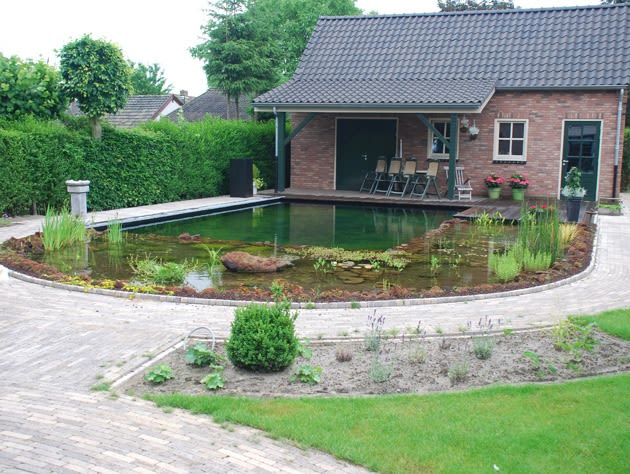
Swimming ponds and bio-pools are designed for swimming while maintaining a natural look. In these ponds, reliable water circulation is important, as well as safety and effective filtration.


Koi and ornamental ponds
Ornamental ponds and koi ponds are the heart of the garden for many pond enthusiasts. In ponds with plants and fish, stable water circulation is essential to keep the water clear and create a healthy living environment.
Streams, waterfalls, and fountains
Streams, waterfalls, and fountains add movement and visual appeal to the garden. These applications require a pump that can move and lift enough water. Factors such as water height and flow play an important role.
Read more about streams, waterfalls, and fountains
Have you identified your pond type? The next step is to determine the purpose of your pond pump.
Step 2 - What do you want to use your pond pump for?
After determining the pond type, it is important to know what you want to use the pond pump for. A pump can have several functions, but usually there is one main purpose.
Circulating and filtering water
In most ponds, the pump moves water to a filter and, if required, a UV-C unit. This removes debris and keeps the water clear.
For this application, a reliable pump with a constant water flow is essential.
Creating extra water flow
In ponds with fish, especially koi ponds, extra water movement is often needed. Flow improves oxygen distribution and prevents stagnant water.
For larger ponds or ponds with many fish, pumps with a higher flow rate are often used.
Running a stream or waterfall
A stream or waterfall requires a pump that can lift water upward. The higher the water must be pumped, the more important the pump capacity becomes.
The head height plays an important role here.
Operating a fountain
Fountains and waterfalls create visible movement in the pond and support oxygen levels in the water.
Energy-efficient water circulation
Because pond pumps often run day and night, energy consumption is an important factor. With continuous use, an energy-efficient pump helps reduce electricity costs.
Step 3 - Choose the right type of pond pump
Now that you know your pond type and application, you can determine which type of pond pump best suits your situation.
The AquaForte range includes several types of pond pumps, each designed for a specific purpose.
Adjustable pond pumps
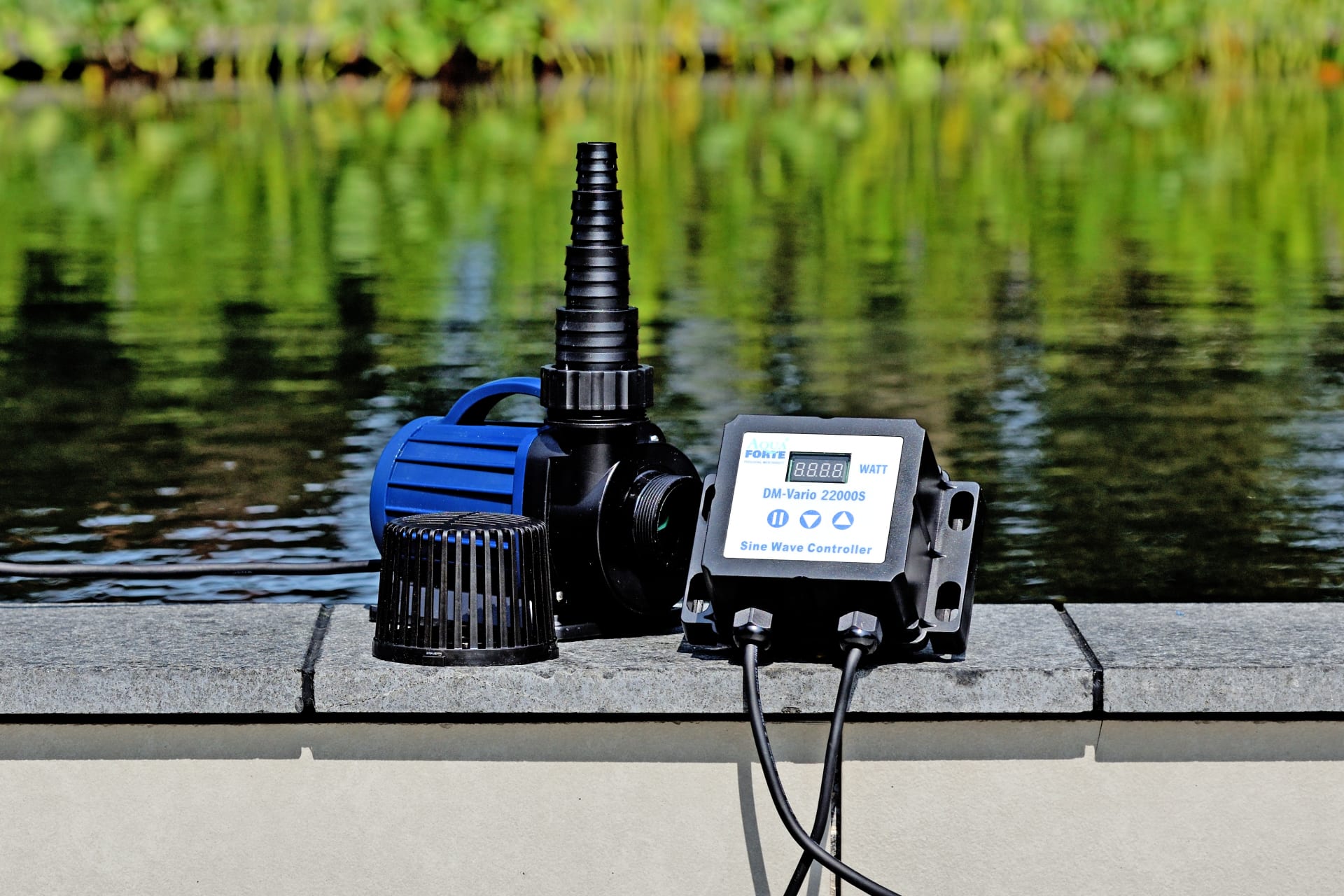
Adjustable pond pumps offer flexibility because the water flow can be adjusted to match the needs of your pond. They are ideal when control over the water flow is required.
Energy-efficient pond pumps
Since a pond pump often runs continuously, energy consumption is an important factor. Energy-efficient pond pumps are designed to operate for long periods with minimal power usage.
View all energy-efficient pond pumps
High-flow pond pumps
For larger ponds or ponds with many fish, strong water circulation is necessary. High-flow pond pumps move large volumes of water and ensure sufficient flow.
Swimming pond pumps
Swimming ponds have specific requirements for safety and water quality. Swimming pond pumps are designed for reliable use in swimming environments and support stable water circulation.
View all AquaForte swimming pond pumps
Pumps for fountains and waterfalls
Fountain and waterfall pumps create visible water movement and support oxygenation of the pond water. Many models include spray heads and are easy to install.
View all AquaForte pumps for fountains and waterfalls
Non-adjustable pond pumps
Non-adjustable pond pumps operate at a fixed capacity and are simple to use. They are often used in basic systems and smaller ponds.
Important considerations when choosing a pond pump
In addition to pond type and application, several factors determine which pump is suitable. By considering these in advance, you can avoid choosing the wrong pump.
Pay particular attention to:
The size of your pond, determines how much water must be moved
The required water circulation, important for filtration and water quality
The head height, especially important for waterfalls and streams
Energy consumption, important for pumps running continuously
Choosing the right pond pump
A well-chosen pond pump forms the foundation of a reliable pond system. By first identifying your pond type and application, it becomes easier to select a pump that fits your needs.
Not sure which pump is suitable for your pond? AquaForte dealers are happy to assist you with expert advice and practical support.
With reliable solutions, AquaForte ensures ponds remain clear and function smoothly.